

SupTech Week 2025 brought together nearly 1,000 live participants from 172 countries and confirmed that the global movement has entered a new phase — moving decisively from experimenting with technology to executing at scale. This blog distils the week’s most urgent priorities: putting AI ethics front and centre, anchoring innovation in purpose rather than trend-chasing, and building internal expertise now for the quantum and privacy challenges ahead.
Author: Elia Resch, Director of Partnerships & Ecosystem Acceleration, Digital Transformation Solutions
This article represents the author’s personal perspectives based on attending SupTech Week 2025.
_________________________

As I reflect on the incredible energy of SupTech Week 2025, it’s evident that our community has entered a new phase of institutional maturation, moving decisively from the ‘what’ of technology to the ‘how’ of global execution. Over five days, we brought together a global community and explored how we can do innovate sustainably and at scale. The numbers tell a powerful story of a ever-expanding movement as we were joined by 959 total live participants, including 118 speakers and leaders from hundreds of agencies across 172 countries. From our events at the World Economic Forum, the World Trade Center, Nasdaq studio and AI Summit in New York to the thousands joining us online from all around the world, the message was clear: the needle is moving.
Leadership, culture & people – the golden thread throughout SupTech Week
If there was one “golden egg” to take away from this week, it is that scaling innovation is a leadership challenge, not a technological one. As Simone di Castri noted when closing SupTech Week, even in our deepest technical dives into data science, the conversation invariably returned to culture. This sentiment was echoed by Marlene Amstad, Chair of FINMA, who powerfully stated, “Culture outweighs data, culture outweighs technology, and culture even outweighs budget”.
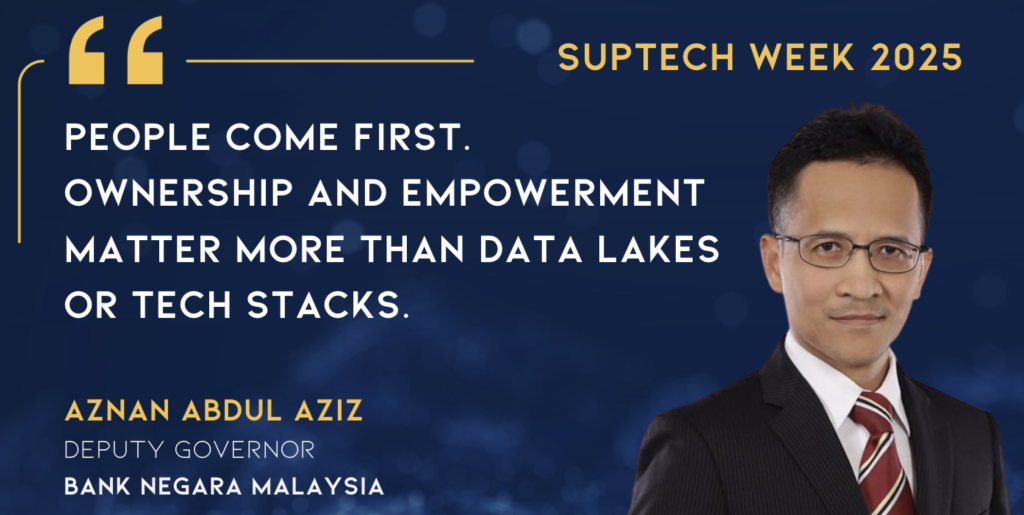
We heard inspiring examples of leading innovation in action. Kevin Greenidge, Governor of the Central Bank of Barbados, shared his radical commitment to a paperless institution. Aznan Abdul Aziz, Deputy Governor, Bank Negara Malaysia reminded us that “People come first. Ownership and empowerment matter more than data lakes or tech stacks”. This cultural shift, creating “psychological safety” where teams feel empowered to “fail forward”, is the prerequisite for any meaningful digital transformation.
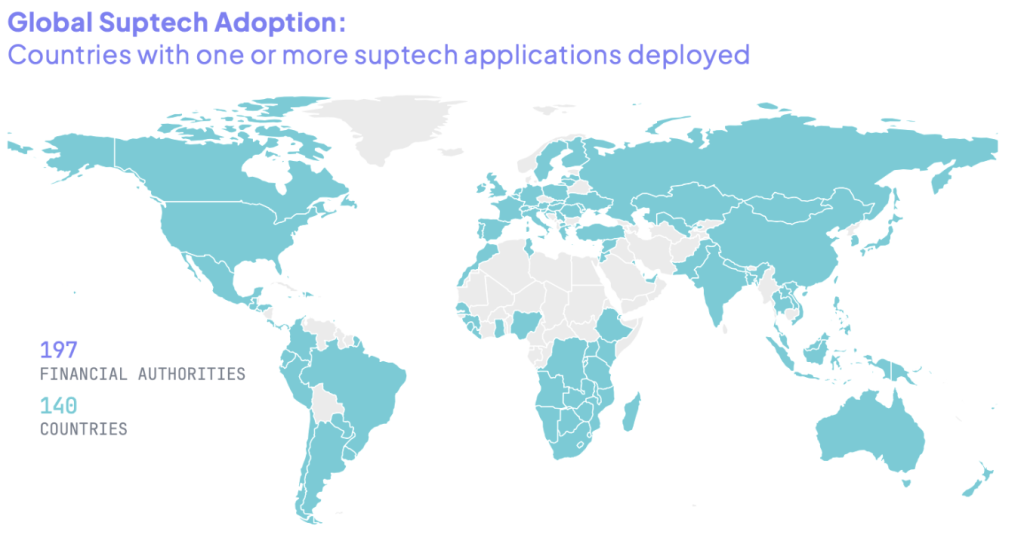
197 agencies are now operating advanced suptech applications
This week also marked the launch of the State of SupTech Report 2025, our most comprehensive longitudinal analysis to date. The data confirms that global suptech adoption is accelerating, with the number of authorities operating advanced (Generation 2-4) applications tripling since 2022 to 197 agencies across 140 countries.
However, the report also highlights a persistent maturity divide. While 43% of agencies in advanced economies (AEs) now operate more than ten applications, only 11% of those in emerging markets and developing economies (EMDEs) have reached that same depth. This capability gap is often shaped by a lack of dedicated resources. For instance, 63% of authorities still lack explicit budgets for AI and GenAI.
The rise of “intelligence-by-design” frameworks
One of the most thought-provoking questions of the week came from Helen Packard, Head of Market Oversight Data & Intelligence of the UK FCA: “Have we moved past data-led regulation to algo-led regulation?“. With authorities like the FCA receiving over 7 billion transaction reports annually, manual oversight is no longer a viable option. This shift toward “algo-led” regulation represents a move beyond simply using data to inform human judgment, toward a frontier where algorithms and agentic AI are increasingly integrated into core supervisory workflows to proactively navigate massive datasets and identify risks in real-time.
We are seeing a transition toward “intelligence-by-design” frameworks, where digital infrastructure is built to be “AI-ready” from day one.
Key developments highlighted during the event include:
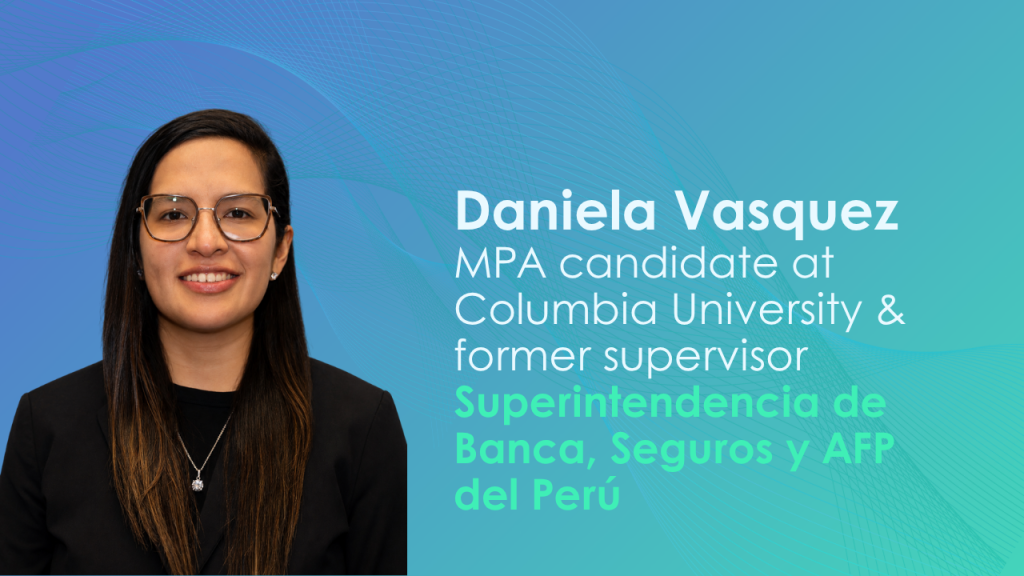
- Superintendencia de Banca, Seguros y AFP del Perú’s “Supervision Assistant”, an AI-based platform that automates the analysis of documental evidence for onsite and offsite inspections, currently focused on guarantee verification with plans to scale into liquidity and moral suitability assessments.
- The FCA’s “MyFCA” portal, a one-stop shop that simplifies compliance, by streamlining the authorized firm journey by unifying fragmented systems into a single sign-on experience.
- The Bank of Namibia’s AI models that can now predict non-performing loans up to four quarters in advance and forecast inflation up to six years ahead.
- The Reserve Bank of India’s Supervisory Data Quality Index (sDQI), which automatically scores institutions on data accuracy and timeliness, incentivizing firms to cleanse their own data at the source.
- The Banca d’Italia’s “RepTech”, which uses sentiment analysis on public online content to compute reputation indicators for supervised entities and detect early warning signals in customer relations.
- The Bank of Tanzania’s Climate Risk Repository, an innovative infrastructure designed to capture and analyze climate-related financial exposures for over 50% of the country’s loans and collaterals.
- The Reserve Bank of India’s “Mule Hunter” and Digital Payments Intelligence Platform, which utilize advanced analytics to tackle the surge in digital financial risks by identifying mule accounts and fraudulent transaction patterns.
- The National Bank of the Kyrgyz Republic’s “Progress Compliance Agent”, an agentic AI “law clerk” that autonomously reviews contract templates in Russian and Kyrgyz, flagging legal violations and suggesting compliant rewrites.
- The Austrian FMA’s “360-degree tool”, an organization-wide project that integrates reporting data, document information, and analytical insights into a single “source of truth” for supervisors.
- OSFI Canada’s data collection modernization strategy, a multi-year project coordinated across several agencies with complementary mandates to standardize and streamline how information is collected and used while enhancing data literacy across the organization.
- The Bank of England’s “Future Banking Data Review” and cloud program, which modernizes infrastructure under the principle to “collect once, collect well,” simplifying reporting by ensuring the same data is not requested multiple times through different templates.
- The UK FCA’s Sanctions Screening Tool, a data-led initiative that objectively tests the configuration and calibration of firms’ screening systems against known outcomes to identify weaknesses and ensure institutional compliance.
- Switzerland’s FINMA’s “3D framework” (Data, Discretion, Discipline), which uses a categorized flagging system – Yellow Flags for proactive scanning, Red Flags for deep-dive investigations of suspicious anomalies, and Black Flags for rigorous evidence gathering in enforcement – supported by LLMs to determine price sensitivity.
- The Central Bank of Brazil’s “Data Quality Engine”, which measures and improves the quality of data flowing through the Open Finance ecosystem by utilizing performance engines and metrics platforms to ensure consistency between transmitters and receivers.
- The National Bank of Rwanda’s AI-ready Electronic Data Warehouse, an infrastructure that integrates granular data from all financial sectors to eliminate fragmentation and power machine learning models for macroeconomic forecasting.
- The Central Bank of Egypt’s digital complaint management platform, which turns raw consumer narratives into a real-time source of predictive data to detect systemic market risks before they escalate.
- The Bank of Uganda’s Digital Supervision System (DSS), which replaces manual collection with a reporting platform utilizing NLP-powered analytics and a supervisor dashboard layer to identify and escalate risks.
- The SFC Colombia’s “360 Dashboard for Operational Risk and Cybersecurity,” which assesses the maturity of institutional cybersecurity, IT management, and business continuity against international standards like NIST and COBIT to identify resilience gaps and prioritize risks.
- The Dominican Republic Superintendencia de Bancos’ “Integrated Supervisory Dashboard,” which integrates data from supervised entities and the central bank to automate delinquency monitoring and portfolio analytics, replacing manual Excel workflows with automated risk flags.
- The Financial Market Commission of Chile’s AI-powered statutory prospectus review tool, which automates the analysis of investment funds’ legal documents and meeting minutes to ensure compliance with regulatory submissions while significantly reducing manual review time.

Exploring future (or present?) frontiers from stablecoins to quantum readiness
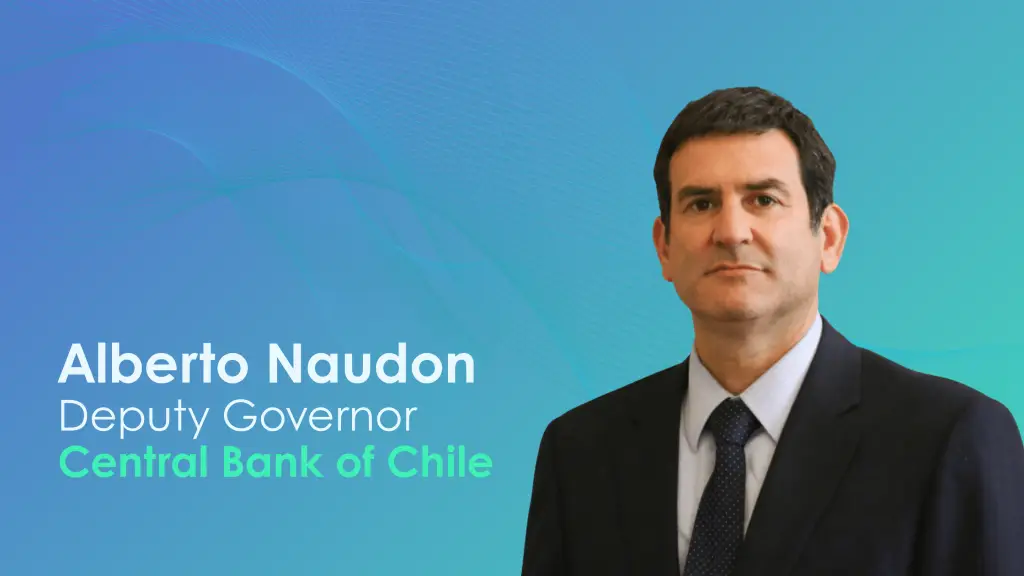
A keynote presentation on stablecoins and dynamic roundtable on quantum security generated intense discussion, prompting many participants’ intentions to prioritize these emerging areas more proactively. Alberto Naudon, Board Member of the Central Bank of Chile, emphasized that stablecoins function like “narrow banks,” modernizing the technology “wrapper” while leaving core financial risks like liquidity and governance unchanged. He advocated for digital-era supervisory tools, including real-time monitoring and algorithmic stress tests, to address the lack of a public settlement anchor. Simultaneously, the quantum discussion served as a wake-up call, revealing that threats to current encryption are imminent and require regulators to build internal expertise to guide the industry safely.

Anchoring AI in robust governance and ethical foundations
With more than 60% of agencies now piloting or experimenting with AI, the focus is shifting from technical capability to institutional oversight. Bernard Nsengiyumva, Executive Director, Financial Stability of the National Bank of Rwanda emphasized that “Strong data governance is not optional; it is the foundation for ethical and effective AI”.
This foundation becomes even more critical with the rise of agentic AI, which uses autonomous, goal-driven systems to coordinate complex workflows. Because these agents require deeper system access and the ability to process broader datasets, they significantly expand the attack surface for novel risks such as prompt injection and malicious data manipulation. To maintain ethical control over these autonomous systems, supervisors must move beyond data literacy to develop algorithmic literacy, ensuring they can interrogate the “why” behind an agent’s decisions. This ensures that human-in-the-loop accountability remains central to the supervisory lifecycle, preventing models from making high-stakes decisions without transparent oversight. Ultimately, the transition from manual processing to AI oversight will redefine the workforce, as Kris Wright, Government of Canada noted, “supervisors that work effectively and oversee AI effectively will replace those who don’t”.
Bridging the gaps with GovSpace
A recurring frustration throughout our workshops was the tendency for innovation to remain siloed. We heard from many authorities who feel they must “start at zero”. In response to these systemic gaps, we were thrilled to launch GovSpace.io during SupTech Week.
GovSpace is designed to be the operating system for public sector innovation. It directly addresses the scaling challenges identified in our research and discussions by providing:
- Connect: A community of practice where peers from dozens of authorities are already exchanging architectural diagrams and use cases.
- Discover: An AI-powered library of solutions and code repositories to stop agencies from “reinventing the wheel”.
- Strategize: Collaborative online diagnostics that help authorities to develop or enhance their digital strategies to build roadmaps grounded in global evidence.
- Transform: An “AI Gymnasium” for secure experimentation and capacity building.
As Karin Elago of the Bank of Namibia noted, “Platforms such as GovSpace will be an excellent tool for us as regulators to explore,” helping to standardize supervisory approaches and lower the budgetary hurdles, especially for smaller economies.
Collective action throughout 2026
The feedback from this week has been deeply moving. 98% of attendees agreed that they now have a better ability to identify relevant suptech applications for their own organisational context. One attendee from the Central Bank of Somalia noted the realisation that even “incremental, well-targeted solutions” can significantly enhance their oversight of financial stability and advance consumer protection.
Reflecting on my debriefs with participants and conversations throughout the whole week, three areas strike me as most urgent for our collective focus.
- First, we must put AI ethics front and center. It is a sobering reality that the adoption of formal AI-governance and ethics frameworks for suptech applications is still the exception rather than the rule.
- Second, we need a stronger focus on purpose-driven innovation. Innovation is not an end-goal in itself, but a means to driving more inclusive and sustainable economies. We must reflect more on the actual real-world impacts our interventions have on citizens and prioritize our projects based on that value.
- Finally, we must be more forward-looking, building internal expertise for upcoming frontiers, including quantum security and the escalating complexity of privacy and data risks.
I truly hope that we can continue to explore these three areas through ongoing multi-stakeholder exchange and carry this momentum together into the next SupTech Week. As Governor Emmanuel Tutuba of the Bank of Tanzania reminded us in his remarks, “Together, we can ensure that suptech delivers what matters most: trust, sustainability, and shared prosperity.”
Let’s keep the conversation going on GovSpace.
____________________________________________
For further information, we encourage you to read the State of SupTech Report 2025, access session recordings and engage in discussions on GovSpace.io.